
1. Introduction
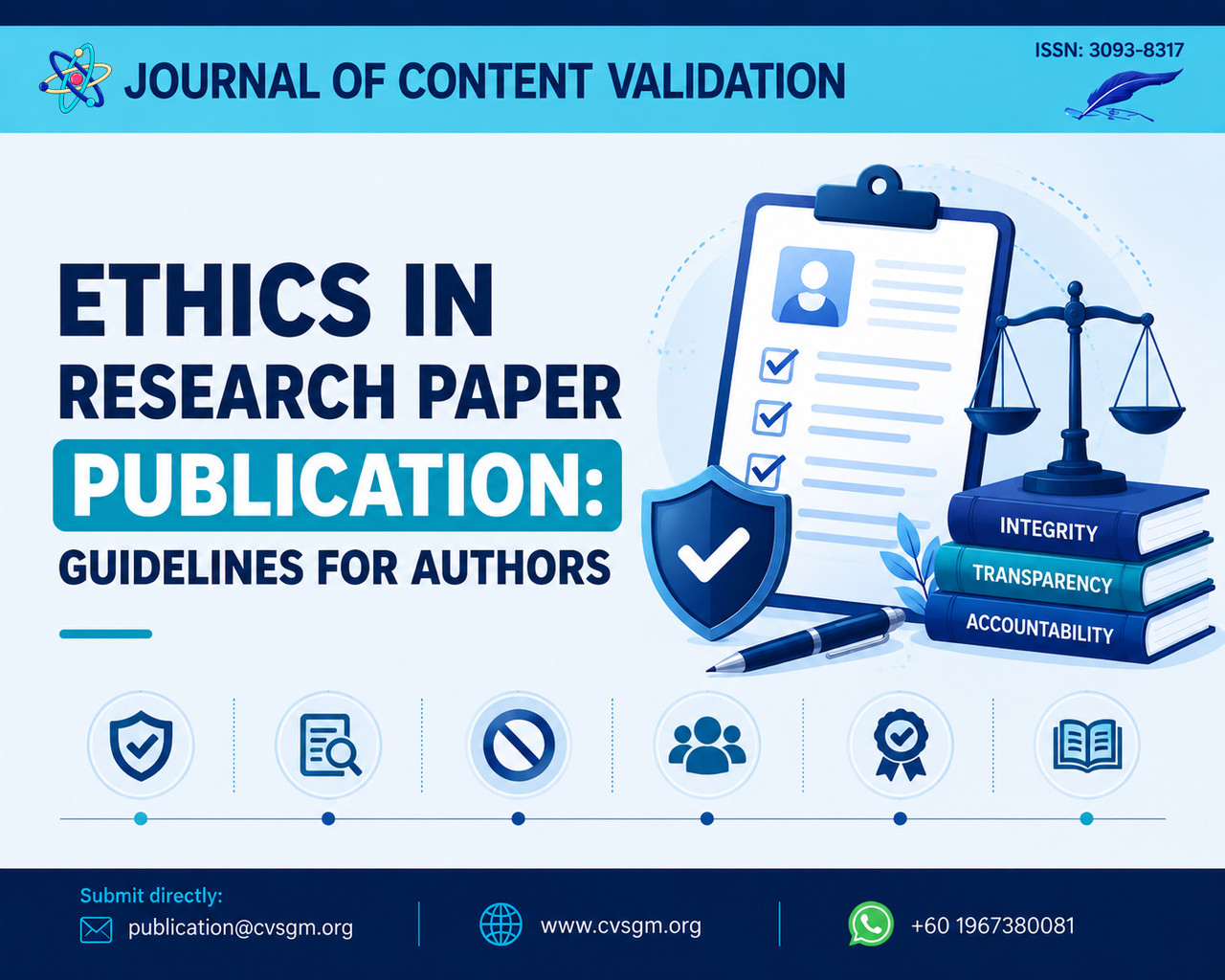
Ethical conduct in research and publication is the foundation of credible academic scholarship. Authors submitting manuscripts to journals are expected to adhere to the highest standards of integrity, transparency, and responsibility. Ethical publishing not only protects the quality of scientific communication but also ensures trust within the global research community.
This article provides essential guidance for authors on maintaining ethical standards throughout the research and publication process.
2. Originality and Plagiarism Avoidance
Authors must ensure that all submitted manuscripts are original works. Plagiarism in any form is strictly unacceptable, including direct copying, paraphrasing without proper citation, or submitting previously published work as new.
To maintain originality, authors should:
- Properly cite all sources of ideas, data, and text
- Use plagiarism detection tools before submission
- Avoid self-plagiarism or duplicate publication of the same study
3. Data Integrity and Honesty
Research findings must be reported accurately and honestly. Fabrication, falsification, or manipulation of data is a serious ethical violation.
Authors are expected to:
- Present truthful and complete data
- Avoid selective reporting of results
- Retain original data for verification if required
- Ensure transparency in data collection and analysis procedures
4. Authorship and Contribution Ethics
Authorship should reflect meaningful intellectual contributions to the research. All listed authors must have significantly contributed to the study.
Ethical authorship practices include:
- Clearly defining author roles and contributions
- Including only individuals who meet authorship criteria
- Avoiding “gift” or “honorary” authorship
- Obtaining consent from all co-authors before submission
5. Multiple Submission and Redundant Publication
Submitting the same manuscript to multiple journals simultaneously is considered unethical. Likewise, publishing the same research in multiple outlets without proper justification is prohibited.
Authors must:
- Submit to only one journal at a time
- Avoid redundant or overlapping publications
- Inform editors if related work is under consideration elsewhere
6. Citation and Acknowledgment Practices
Proper acknowledgment of prior work is essential in academic writing. Authors must ensure that:
- All referenced works are accurately cited
- Proper credit is given to original authors and sources
- Funding sources and institutional support are acknowledged
Inadequate citation practices may lead to ethical violations and manuscript rejection.
7. Conflicts of Interest
Authors must disclose any financial, institutional, or personal relationships that could influence their research or interpretation of results.
Transparency helps maintain trust in scholarly communication and prevents potential bias in research findings.
8. Ethical Approval for Research Involving Humans or Animals
Research involving human participants or animals must comply with ethical guidelines and institutional review board (IRB) approvals where applicable.
Authors should:
- Obtain informed consent from participants
- Ensure confidentiality and privacy of data
- Follow institutional and national ethical regulations
- Clearly state ethical approval in the manuscript
9. Peer Review Ethics
Authors must respect the peer review process and avoid any attempt to influence reviewers or editors unfairly. Constructive engagement with reviewer feedback is essential for improving manuscript quality.
10. Retraction and Corrections
If significant errors or ethical issues are discovered after publication, authors are responsible for cooperating with editors to issue corrections or retractions when necessary.
Maintaining scientific integrity is more important than publication record.
11. Conclusion
Ethical research and publication practices are essential for maintaining the credibility and reliability of academic literature. Authors who adhere to ethical standards contribute to the advancement of knowledge and uphold the integrity of the scholarly community. Journals and institutions rely on responsible authorship to ensure that published research remains trustworthy, transparent, and impactful.